


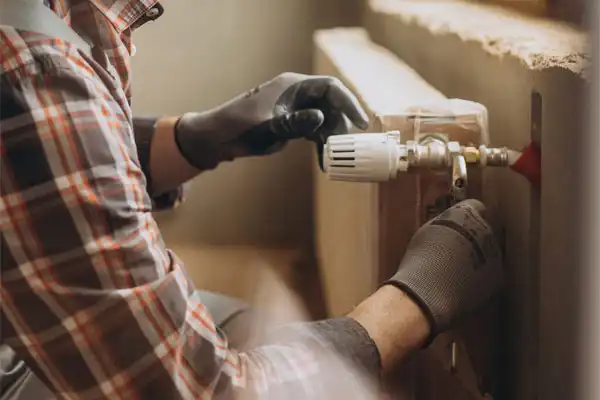
When a hydronic heating unit (a system that circulates hot water through pipes and radiators to heat a home) feels cold at the top and hot at the base, knowing how to bleed a radiator is essential. Air pockets naturally rise to the highest sections of a hydronic system. This trapped air stops hot water from filling the entire cast-iron column or panel. Bleeding a radiator takes a few minutes and releases the trapped pocket. Hot water can then circulate freely, helping restore steady warmth throughout the room.
Older homes across Northbrook, Evanston, and Glenview rely on boiler-fed heating through harsh winter weather. During continuous heating cycles, small bubbles of dissolved air collect inside the pipes. These bubbles eventually settle inside individual radiators. This guide explains how to bleed a radiator cleanly, reviews key warning signs, and outlines when to turn to AA Service Co. for professional help.
Signs of Trapped Air in Your Heating System
Recognizing Uneven Warmth and Strange Sounds
The clearest indicator of trapped air is feeling cold spots on radiator panels during an active heating cycle. Hot water enters through the supply pipe near the floor. Air rises to the top of the unit. As a result, the upper sections stay cold while the bottom pipes stay hot. If several units stay cold, your home will struggle to reach your thermostat setting.
Audible noises also suggest air is moving through your heating lines. Homeowners frequently hear bubbling, gurgling, or clicking sounds when water pushes against trapped air pockets. In severe cases, air blocks water circulation entirely. This leaves one room noticeably colder than adjacent rooms on the same heating zone.
Essential Tools for the Job
Before you begin learning how to bleed a radiator, gather a few basic supplies. You need a dedicated radiator key. This small metal tool fits the square valve stem found on traditional valves. If your unit has a modern replacement valve, a standard flathead screwdriver often works instead.
You also need a thick towel and a small cup or bowl to catch water droplets. Boiler water in closed hydronic systems often carries dark sediment. Placing a towel beneath the fitting helps protect your trim and hardwood flooring from stains.
How to Bleed a Radiator: Step-by-Step Instructions
Following a set sequence makes bleeding a heating unit straightforward. Properly bleeding a radiator clears trapped air without spills or burns.
Step 1: Turn Off the Boiler and Allow It to Cool
Turn off your boiler at the thermostat or emergency shutoff switch before touching any valve. Bleeding while the circulator pump (the motor that moves hot water through the system) runs can pull more air into the loop. Let the equipment cool down for 30 to 60 minutes. This cooling period helps prevent hot water from scalding your hands during venting.
Step 2: Locate the Bleed Valve
Look at the upper side of the central heating radiator to find the bleed valve. This valve sits near the top corner opposite the supply pipe. It consists of a round plug with a square central socket or slotted screw head.
Step 3: Open the Valve Slowly to Release Air
Hold your catch cup directly beneath the valve outlet. Place your towel against the wall behind the fitting. Insert the key into the socket. Turn the key counterclockwise about one-quarter turn until you hear air hissing out. Never unscrew the plug entirely, because the screw pin can pop out and cause water to flood your floor.
Step 4: Close the Fitting Once Water Streams Smoothly
The hissing noise indicates air is escaping from the unit. Hold your container in place until the hissing stops and water streams out steadily. As soon as you see a solid stream without air bubbles, turn the key clockwise to close the valve. Do not overtighten the stem. Wipe away any lingering moisture to prevent exterior rust.
Step 5: Work in the Correct Order Across the House
If multiple units need service, bleed them systematically. Start on the ground floor closest to the boiler. Work outward through the lower rooms before moving upstairs. Bleed the highest floor last. This sequential order clears rising air pockets effectively through the entire system.
Post-Bleeding Checks: Monitoring Boiler Pressure and System Balance
Bleeding your radiators releases air along with small amounts of water from the closed hydronic loop. Hydronic heating systems require adequate water pressure to push heat through every level of the house. After venting your radiators, check the pressure gauge on your boiler.
For most residential systems, cold operating pressure typically sits between 12 and 15 PSI. Many boilers feature an automatic fill valve that replenishes lost water, while older configurations rely on manual feed valves that require manual opening. If the pressure stays below that normal range even after refilling, a professional technician should inspect the expansion tank (a small tank that absorbs pressure changes as water heats and cools) and pressure relief valve (a safety valve that releases water if system pressure gets too high).
When Bleeding Does Not Fix the Problem
Venting air solves many heating issues, but some symptoms indicate mechanical trouble. If a radiator stays cold at the bottom while the top is warm, rust and sediment sludge have accumulated inside the cast iron. Clearing this sludge requires a complete hydronic flush.
Frequent air accumulation can also indicate a failed expansion tank diaphragm, loose heating pipe fittings, or a leaking air vent near the boiler. For persistent heating problems, professional heating maintenance & repair helps protect system components from unnecessary strain. Licensed contractors service residential boilers across Highland Park, Lake Forest, and Wilmette to help keep heating systems running reliably through winter.
Maintaining Efficient Hydronic Heating
Venting air pockets helps restore more even warmth across living rooms and bedrooms. Bleeding your radiators regularly helps maintain peak efficiency from your HVAC system all winter long. Verifying your boiler pressure after each round of bleeding keeps pumps and valves working smoothly.
If radiators continue to rattle, drip water around valve stems, or remain cold after venting, routine bleeding cannot solve the underlying mechanical fault. Closed-loop hydronic systems rely on balanced flow, intact seals, and properly pressurized expansion tanks. When basic troubleshooting fails, booking specialized diagnostic care can help protect your home from unexpected winter breakdowns.
When to Call a Licensed HVAC Professional
Homeowners can safely handle basic bleeding, but certain hydronic symptoms require expert tools and testing. Contact a licensed heating technician if the boiler pressure gauge consistently reads well outside the normal operating range, if radiator valves are seized, stripped, or leaking water around the stem, if specific rooms remain cold despite repeatedly venting trapped air, if the boiler or circulator pump produces loud clanking, grinding, or banging noises, or if the system shows signs of exterior pipe corrosion or active water leaks.
Homeowners across Northbrook, Glencoe, Winnetka, and the greater North Shore can reach out to our team at AA Service Co., serving northern Illinois since 1965, for comprehensive hydronic evaluations, boiler tune-ups, and system balancing.