

A boiler heats water or creates steam to send warmth through radiators or underfloor tubing. In contrast, a furnace heats air directly and distributes it through ductwork. Deciding between a boiler vs furnace comes down to your home layout, your comfort preferences, and existing infrastructure. Older residences throughout Northbrook, Evanston, Highland Park, and surrounding North Shore communities often rely on hydronic piping and cast-iron radiators. Properties built across Greater Chicagoland with central ductwork depend on forced air instead.
Each heating method delivers warmth in a distinctly different way. When evaluating a boiler vs furnace for your property, you should understand how distribution channels influence monthly operating costs and indoor comfort. This guide compares how both systems function, outlines key operational differences, and provides clear guidance when planning a heating system replacement. If you’re unsure which system fits your home, explore AA Service Co. for guidance anytime.
Heat Production and Distribution Methods
The physical process used to warm your living space marks the main difference between these two systems. Understanding how each unit generates heat clarifies why they feel so different during bitter winter weather.
How Boilers Distribute Hydronic Heat
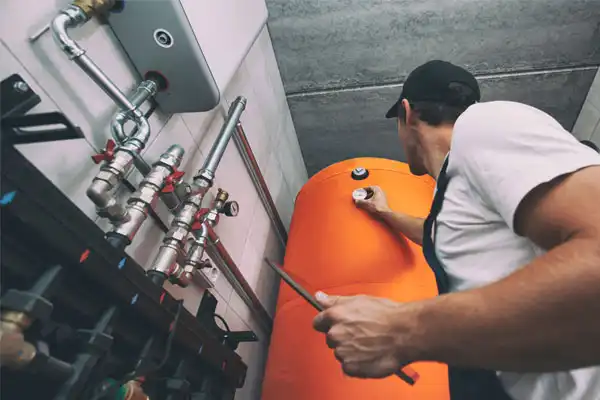
A boiler functions as a specialized water heater connected to a closed-loop pipe network. Natural gas, propane, or electricity warms water inside a durable heat exchanger. In a hydronic system (one that moves heat through water rather than air), a motorized circulator pump pushes heated water through sealed copper or cross-linked polyethylene (PEX) pipes. This water travels directly to cast-iron radiators, baseboards, or radiant heating loops beneath your floors.
Steam boilers operate on a related mechanical principle. The unit boils water into steam, which rises naturally under pressure through iron pipes into radiators. The steam condenses back into liquid water and drains down to the boiler reservoir to begin the cycle again. Because water retains thermal energy longer than air, radiators continue radiating gentle, ambient warmth after the burner shuts down. Vintage homes in Glencoe, Winnetka, and Lake Forest often feature these hydronic layouts, which deliver steady comfort during severe cold snaps. Homeowners looking to maintain or upgrade these systems can schedule specialized boiler services tailored for residential hydronics.
How Furnaces Circulate Forced Air
A furnace relies on forced-air heating to distribute heat through duct channels. When your thermostat calls for heat, gas burners ignite inside a combustion chamber. These flames heat a metal heat exchanger while combustion fumes vent safely outside. A blower motor draws cooler air from room return registers, pushes it across the hot heat exchanger, and blows heated air into supply ducts throughout your home.
This cycle delivers prompt heating, raising room temperatures quickly as warm air exits floor and ceiling registers. From an airflow perspective, a furnace relies on positive air pressure generated by a blower fan. A boiler operates through silent fluid convection and mechanical pumping. Both systems warm your home effectively, but their delivery methods feel distinct.
Boiler vs Furnace: Energy Efficiency and Maintenance
Both heating platforms have advanced considerably in fuel efficiency over recent years. Modern mechanical designs focus on conserving energy, yet maintenance demands and service lifespans reflect their distinct operating mechanics.
Efficiency Ratings and Fuel Utilization
Heating efficiency is measured by annual fuel utilization efficiency, known as AFUE. This rating reflects the percentage of fuel converted into usable space heat versus energy lost through exhaust venting. According to standards established by the U.S. Department of Energy, modern baseline furnaces must achieve at least 80% AFUE.¹ High-efficiency condensing furnaces reach ratings between 90% and 98% AFUE by extracting thermal energy from flue gases.¹
Modern condensing boilers achieve similar performance, typically delivering between 90% and 95% AFUE. When comparing a boiler vs furnace, hydronic heat holds a thermodynamic advantage over long cycles. Water holds and transfers heat energy with far greater capacity than air. Less energy escapes through wall cavities when heat travels through insulated pipes rather than sheet metal ducts. Ducted furnaces lose heat through unconditioned attics or crawlspaces when duct joints lack tight seals.
System Longevity and Preventative Care
Equipment lifespan represents another major consideration. According to ASHRAE equipment life expectancy data, a standard gas furnace typically lasts 15 to 20 years before requiring replacement.² In contrast, cast-iron boilers can provide 20 to 35 years of service when hydronic water chemistry remains properly balanced.² Boilers contain fewer moving components than furnaces, which reduces everyday mechanical wear.
For homeowners in Glenview, Wilmette, and Deerfield, planned upkeep protects equipment value. Technicians inspect boiler expansion tanks, check system water pressure, service zone valves, and clean burners. Furnaces place regular mechanical demands on blower fans, belts, and inducer assemblies. Furnace air filters require inspection and replacement every 60 to 90 days to maintain steady airflow and avoid high-limit switch trips.³ Scheduling seasonal heating maintenance and repair keeps safety switches, burner assemblies, and venting systems working safely throughout deep freezes.
Air Quality and Air Conditioning Compatibility
Your heating choice affects more than ambient winter temperatures. It also influences indoor humidity levels and dictates how easily your house supports whole-home cooling.
Impact on Indoor Air Quality and Humidity
Forced-air furnaces circulate indoor air constantly through return and supply registers. When paired with high-efficiency media filters, a furnace captures dust, pet dander, and pollen before particles settle. However, if ducts develop leaks or harbor debris, the blower can draw dust from crawlspaces and blow it into living spaces. Rapid air movement also tends to dry out indoor air during subzero temperatures. Many homeowners install dedicated humidification equipment to protect woodwork and avoid dry winter skin.
A hydronic boiler warms rooms through radiant heat and natural convection without blowing air. Because radiators and subfloor tubing do not move air mechanically, they do not agitate dust or pet dander. This makes hydronic heat a frequent preference for households with dust sensitivities. Protecting overall indoor air quality still requires adequate fresh air ventilation, proper filtration, and balanced winter humidity across every living level.
Adding Whole-Home Cooling
Integrating central air conditioning highlights another structural difference in the boiler vs furnace decision. Homes with forced-air furnaces already contain the duct network needed for central cooling. A technician can readily install an indoor A/C evaporator coil and connect it to an outdoor condenser. The furnace blower fan then circulates cooled air during humid summer weather.
Homes heated by boilers lack central ductwork entirely. Adding central cooling to a radiator-heated property requires a separate distribution setup. Homeowners frequently install ductless mini-split systems or compact high-velocity systems routed through closets and attic beams. In historic neighborhoods across Barrington and Libertyville, mini-split heat pumps pair seamlessly with existing boiler radiators. While cooling a boiler-heated home is straightforward, it requires dedicated cooling equipment rather than shared ducting.
Boiler vs Furnace: Which System Fits Your Home?
Choosing between a boiler and a furnace depends on your existing architecture, physical floor plan, and personal comfort priorities. Converting from a radiator network to central ductwork, or running new pipes for radiators, requires extensive carpentry and remodeling. For most properties, installing a modern, high-efficiency system within your existing mechanical setup is the most practical path forward.
If your residence already features cast-iron radiators or radiant subfloor piping, installing a modern high-efficiency boiler preserves architectural character while delivering quiet, draft-free warmth. If your home has existing ductwork, a modern high-efficiency furnace offers fast warmth and simplified central A/C integration. For homeowners in Skokie, Northfield, and nearby communities, fitting equipment to your home layout helps support reliable winter performance. Arranging an in-home assessment for heating installation allows an experienced professional to perform precise heat-loss calculations and recommend the best system configuration for your floor plan.
Schedule Your Heating Consultation With AA Service Co.
Serving North Shore and Greater Chicagoland homeowners since 1965, AA Service Co. provides heating installation, maintenance, and repair services backed by experienced technicians and upfront pricing. Our team inspects your existing heating setup, explains your equipment options, and helps you navigate the boiler vs furnace choice for your home. We support homeowners across Northbrook, Glenview, Highland Park, and surrounding areas. Reach out online today to schedule your heating consultation and prepare your home for winter comfort.
Sources
- Congressional Research Service. Energy Efficiency: DOE’s Regional Standards for Indoor (Non-Weatherized) Residential Gas Furnaces. EveryCRSReport.com. November 21, 2014. Accessed October 23, 2026. https://www.everycrsreport.com/files/20141121_R43815_bc8b67b66de4410684dc80d9f66ace2b1a3bdc94.html
- Economic analyses and life-cycle costs. In: ASHRAE Handbook—HVAC Applications. ASHRAE. Accessed October 23, 2026. https://xp20.ashrae.org/SupplementalFiles/PHVAC9/Economic_Analyses_and_LCC.pdf
- Heat and cool efficiently. ENERGY STAR. US Environmental Protection Agency; US Department of Energy. Accessed October 23, 2026. https://www.energystar.gov/saveathome/heating-cooling